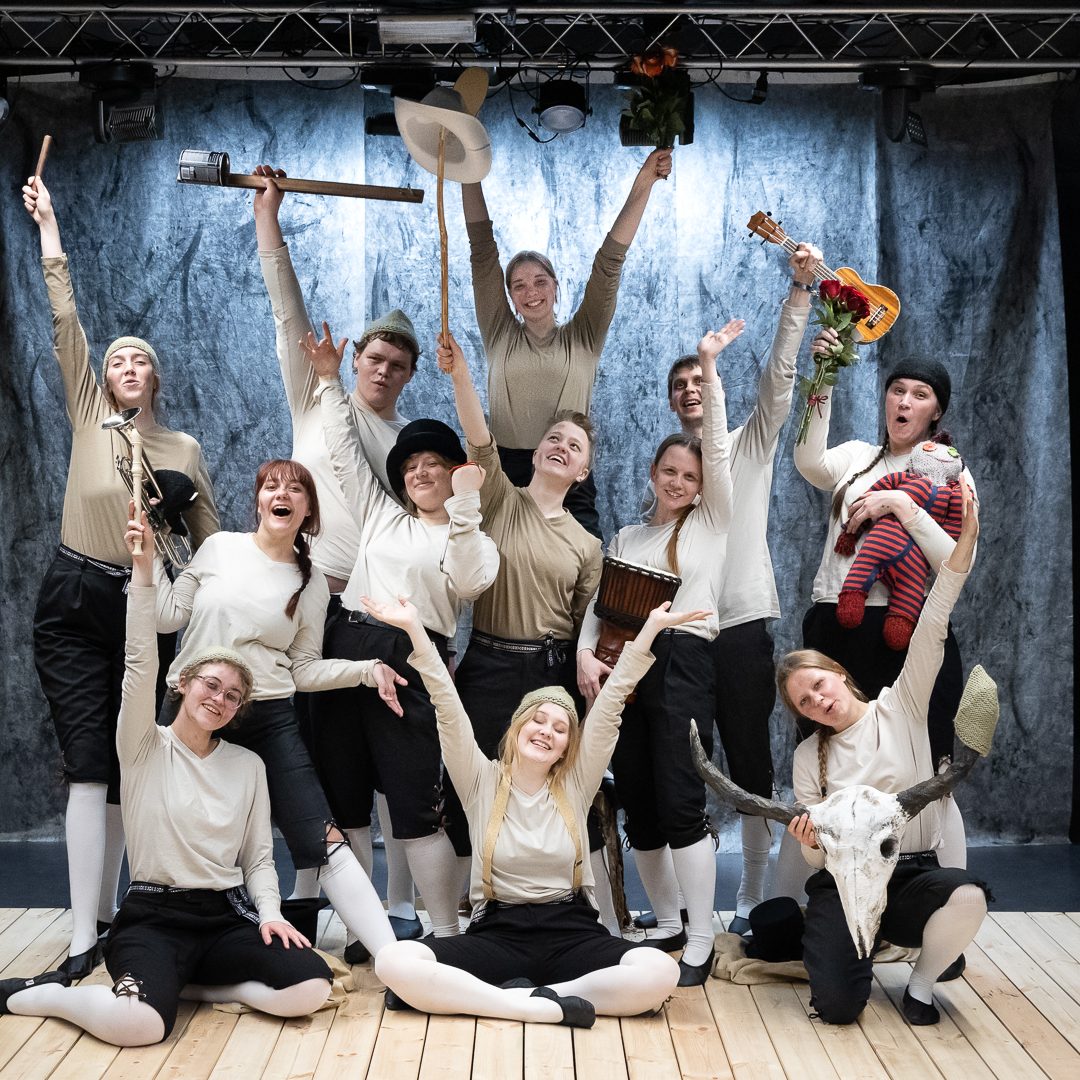
Tartu Student Theatre Group:
Kuradi Lood (The Devil’s Stories)
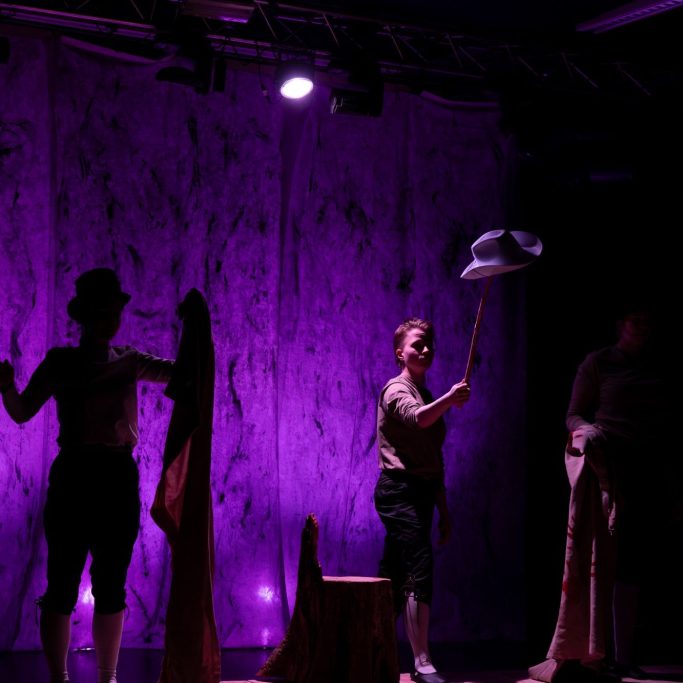
Tartu Student Theatre's production Devil Stories is based on folk tales, where the devil is not just a mythological creature, but a cunning deceiver, a shape-shifting manipulator who operates on the basis of a deceptive "contractual" logic. The focus of our story is on the devil as a reflection of the ugliness of the human soul, something that feeds on and manipulates the weaknesses of human nature - greed, laziness, lust, pride, vanity and the desire for revenge.
The story is centered around the motif of “selling one’s soul”: contract made on the basis of vague agreements and wordplays, where the price of temporary success would be eternal punishment or loss of one’s essence.
The play explores the multifaceted nature of the devil: at one moment he is a demonic tempter, at another a ridiculous and foolish figure who can be outwitted with cleverness. Aesthetics of performance is a mixture of story-telling and movement theatre with choir (sounds, texts, voices). Through clowning and elements inspired by Japanese Kabuki theatre, the devil’s role in the creation of the world is woven onto the stage, seen as a struggle between the evil and the ugly.
Synopsis of the Play
Prologue
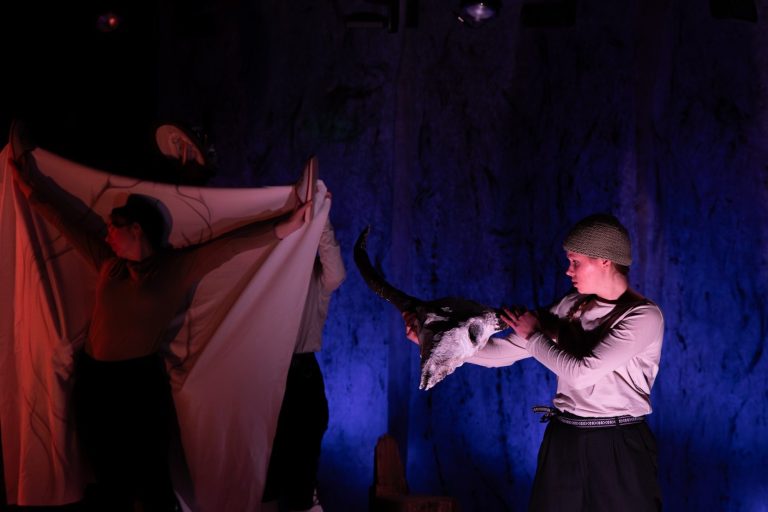
The Legend of the Devil and the Oak. God and the Devil create the world - the Devil carries mud from the bottom of the primordial world and God creates creatures from it. The Devil also wants to create and rule the world. God allows this only on condition that all the leaves fall from the oak. Everything is fine until man sees the oak.
1. The Golden Cat
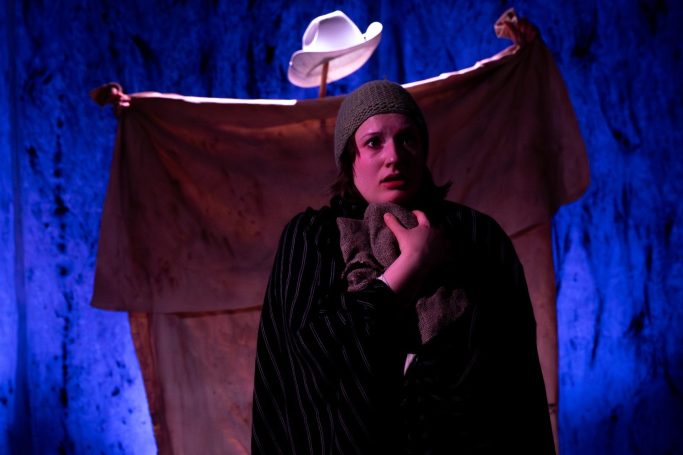
A motif from the popular Bluebeard tale. A landowner gives his three daughters the task of preparing a meal. The daughters go one by one to fetch potatoes from the field and see a golden cat running between the furrows. The cat turns into a handsome gentleman and lures the girls to see the beautiful rooms in his house. There he locks them up, orders them to cook and forbids them from going into the most beautiful room. The youngest daughter manages to trick the devil by making a doll in her place and sneaking into a bag, which the devil intends to take to the girl's father as a reward for her service.
2. The White Ox
A widower takes his dead wife's shoes and goes in search of a new wife to whom his wife's shoes would fit. The devil, appearing as a woman, cuts off her heels and becomes the man's wife by deception. The man's son sees the cut heel of his stepmother and thus falls under her wrath. The white ox, to whom the son goes to complain of his troubles, informs him that the stepmother is tricking his father into killing the ox and the boy, claiming that washing her feet with their blood will heal her. Fleeing from the devil, a forest, a mountain and a lake are created as obstacles.
Having escaped the devil's clutches, the ox gives the boy his miraculous horn, which makes wishes come true. The boy ends up in a kingdom as a swineherd and with the help of the horn he manages to become the king's son-in-law and then a ruler, who "rules the kingdom “wisely” with the help of the horn, and to this day cuts down the forest and mines the sand mountain."
3. Golden suspenders
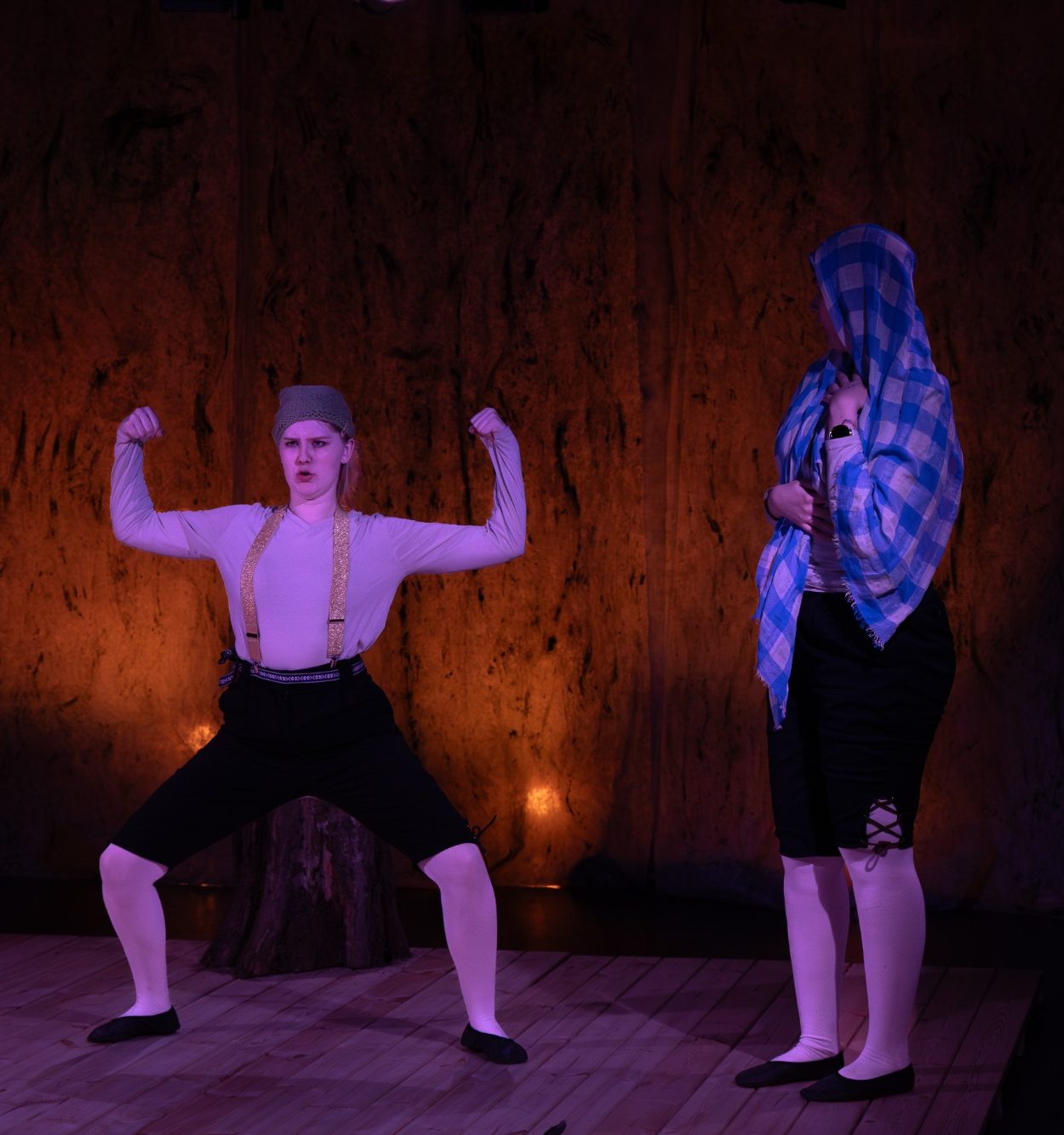
A widow wanders in the forest with her son. They come to a giant rock. After going to shit behind it, the boy finds golden suspenders, which make him incredibly strong. Having reached the devils house, devil seduces the widow and tricks the boy into looking for medicine for his sick mother in three enchanted huts. In the last of them, the boy finds three princesses who are sewing blankets from raw horseskin and thus saves them from witchcraft. The mother, under the influence of the devil, gouges out her son's eyes to trick out the suspenders for the devil. The princesses find the blind boy, take him to their kingdom and have him cured. The boy takes revenge and becomes the ruler of the kingdom himself "where he “wisely” ruled with the help of the suspenders and passed them and his debts on to his children."
4. The Devil's Godson
A child falls ill and the villagers order the mother to throw him into the fire. In distress, the woman calls on the devil for help, who promises to cure her son and claims the child as his godson. Time passes and the devil comes to claim the child. The child's father goes to get help from a wise man, who suggests that the father, citing the inconsistency of the terms of the contract "no moon - no right", turn the devil and his brothers into a cat, a mouse and a bedbug. Four years later, the man gets lost in the forest and the devil promises to help him out "if the man pays the debt that the devil lent him four years ago". Now the wise man suggests finding out the devil's name. (A motif of Rumpelstiltskin).